Brainstorm
Medical device companies buying engineering consulting are evaluating a very different thing than most B2B software buyers: not features, but risk — can this partner actually get a device through FDA, EU MDR, or ISO 13485 without derailing the timeline. The site had to read as credible to a regulatory-affairs lead within the first screen, or it wouldn’t get past the first click.
Discovery
Two buyer types needed different proof: startups and emerging MedTech companies care about cost efficiency and not needing enterprise-tier pricing for early-stage work; established enterprises care about flexible, scalable engagement that can extend their existing team without the overhead of a full vendor onboarding. “Who We Partner With” separates these explicitly, plus a third segment — surgeons and medical innovators turning an idea into a real product — since that’s a distinct entry point into the same service stack.
Design
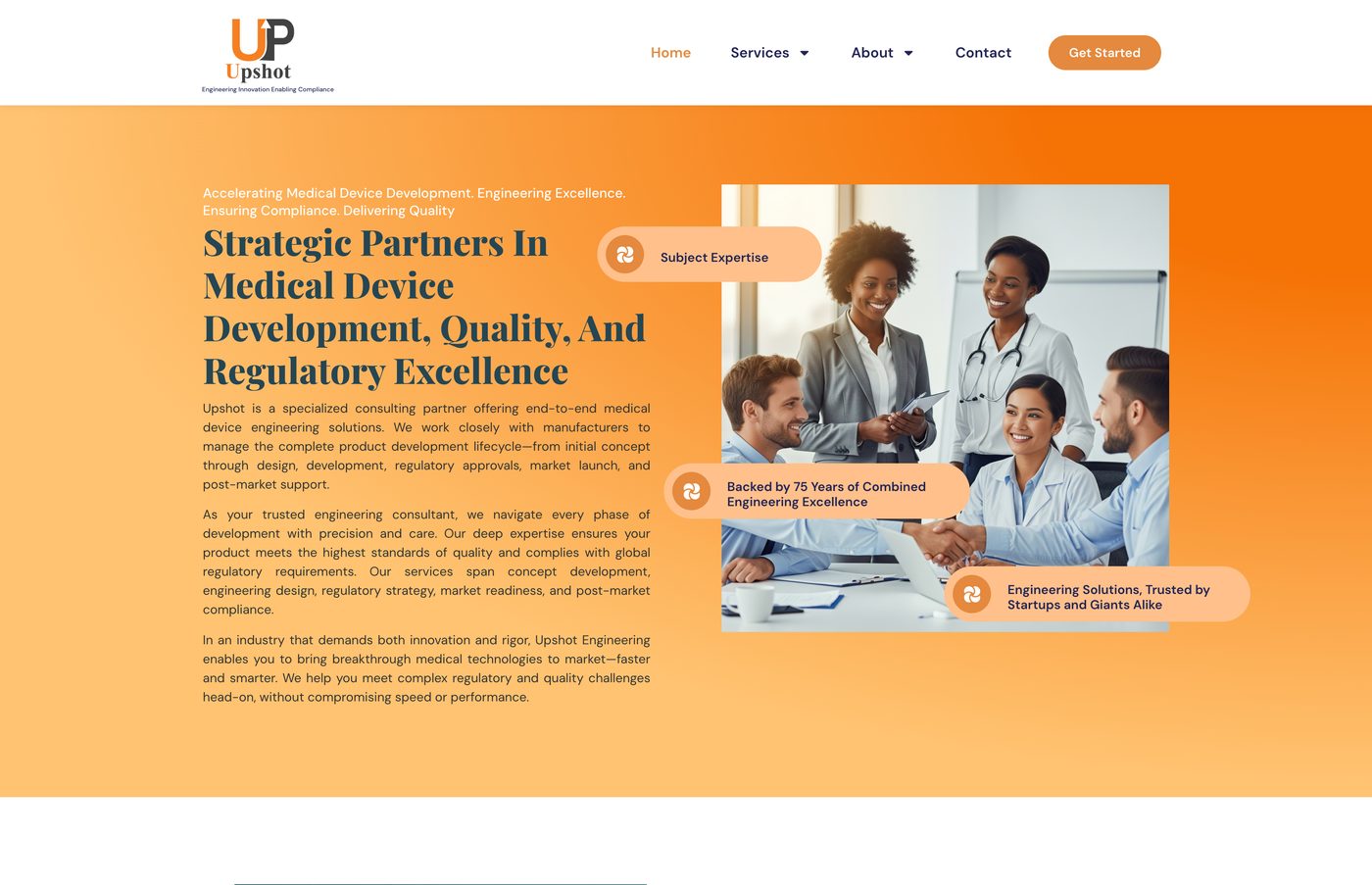
“75 years of combined engineering excellence” and “trusted by startups and giants alike” are surfaced as floating credibility badges directly over the hero image rather than lower on the page, because trust signals needed to land before the service list did. The service breakdown (New Product Development, Quality & Regulatory, Sustenance Engineering, Software as a Medical Device, Manufacturing Support, Post-Market Support, Staff Augmentation) mirrors the actual device lifecycle stages, so a visitor can self-locate where their project currently sits.
Build
Each service card names the specific standards it covers (ISO 13485, 21 CFR 820, IEC 62304, ISO 62366-1) rather than describing capabilities generically — for a regulatory-literate buyer, naming the standard is the credibility signal, not a paragraph explaining what it is. The contact flow ends in a direct lead form rather than a generic “get in touch,” framed around a specific next step: schedule a free consultation.
Delivery
Live with client testimonials, a full service catalog, and a working lead-capture form.